
Gianni Fabrizio – “It’s a Matter of Soil”
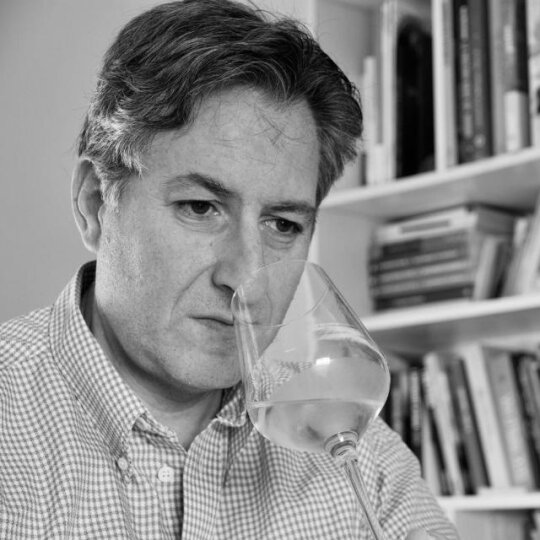
Gianni Fabrizio is one of the most respected voices in contemporary Italian wine journalism. Editor of the Vini d’Italia guide by Gambero Rosso, he has built his career on years of tasting, on-the-ground experience, and ongoing dialogue with Italy’s wine regions and producers. His perspective on Cerequio is shaped by decades of vintages, evolving climates and stylistic shifts – and by his recognition of a rare quality in this cru: the ability to remain true to itself.
When it comes to Barolo crus, there’s often an effort to create hierarchies. Does that still make sense today?
Not really. Or rather – there’s no official ranking, nor could there be. There are over 170 named Menzioni, plus the 11 communal designations, so any classification ends up being subjective. That said, Cerequio has always ranked very high in my personal list – easily in the top ten, and often in the top five.
What sets Cerequio apart, in your experience, from other crus?
For me, it’s what the French would call a grand cru – and it has all the attributes you’d expect from a wine at that level. First and foremost, it’s highly recognizable, with a strong sense of place. It’s naturally elegant, with pitch-perfect balance, marked aromatic complexity, and significant structure – though never overpowering.
And then there’s the Cerequio from Michele Chiarlo, which has always stood out to me even more. I remember tasting it with Gigi Piumatti and Daniele Cernilli – we could often pick it out blind, thanks to what I’d almost call ‘oriental’ notes: balsamic, menthol, sometimes eucalyptus. It was never about oak – it’s a matter of soil and signature. And surprisingly, that character has stayed consistent over time.
The track record with critics seems to support that continuity.
Absolutely. Just look at the accolades. The first vintage to earn Tre Bicchieri was 1988, and since then it’s won the award twelve times (‘88, ‘93, ‘95, ‘96, ‘97, ‘98, ‘07, ‘09, ‘10, ’16, ’18, ’21). That tells you a lot about how solid this cru is, and how consistently it’s been interpreted over the years.
Meanwhile, the climate has changed, and many producers have shifted their styles. How has Cerequio responded?
The climate shift is obvious, and vineyard management has had to adapt. But what hasn’t changed is the way Chiarlo has approached this cru. The estate has always allowed the land to speak – and that’s why the same qualities that made Cerequio recognizable back then are still what define it today. Other producers have changed their style, or started working with Cerequio more recently; those like Chiarlo, who’ve worked it for decades, have been able to build real continuity.
How much of that comes down to Michele Chiarlo’s legacy?
A great deal. I met Michele when I was young, and I learned a lot from him. He had a charismatic way of conveying his vision – something that outlasts any trend. Today, you can clearly feel that Stefano and Alberto are carrying that legacy forward, and more and more people in the trade are recognizing it too. They’ve done an excellent job continuing what Michele had envisioned and set in motion.
Looking ahead, what are the biggest challenges for Chiarlo?
I think the main challenge is safeguarding what’s been built. Barbera – and Nizza in particular – is a legacy Michele devoted his life to, and Stefano is continuing that work with real conviction. Barolo and Barbaresco remain cornerstones of the estate. With Barbaresco, there are still dynamics evolving, but the path is clear.
Is there a personal memory tied to Chiarlo wines that stands out for you?
Yes – the first Chiarlo wine I ever tasted was a beautiful Gavi Fornaci, back in the early ’90s, made with their original winemaker. It was a great white, and a project that deserves to be remembered. I think it still has a lot to say.
Lastly, Palás Cerequio: how do you see this hospitality project?
To me, it reflects Michele’s style perfectly – always understated, never overreaching. The hospitality offering feels like a natural extension of the cru itself, designed to highlight the value of an extraordinary place. The restaurant arrived gradually, always careful not to compete with the local community. It’s a measured, coherent approach – one that feels especially relevant today.