Cannubi, harmony and balance of the “souls” of Barolo

About Cannubi it is difficult to say something that has not already been said. Yet it is also impossible not to say anything.
Cannubi, in fact, is the most famous cru – or Additional Geographical Mention – of the Barolo appellation, that vineyard envied by many, dreamed of by others and cultivated by very few lucky ones. By all, however, recognized as the summa of the souls of Barolo, which here find their most complete and harmonious expression.
To understand what Cannubi is, we need to start from his position. The Cannubi vineyard occupies the central part of a large wedge-shaped hill that rises just before the town of Barolo. The tip of the wedge faces Northeast, towards Alba, while the base ends with the first houses of the village and faces Southwest. Curiously, the hill is perfectly delimited by two valley roads, the Provinciale 3 and Via Alba, both ascending towards the center of Barolo. Not all of the Cannubi hill, which has about 37 hectares, is simply recognized as “Cannubi”. After a difficult historical-archival research and an even more difficult delimitation of the Mention, the Cannubi area was officially divided into 5 zones. The term Cannubi (and only “Cannubi”) means the Mention, of about 14 hectares, which includes the central and top part of the hill. The tip of the wedge is instead called Cannubi Boschis, while the three southwest areas bordering Barolo are mentioned as Cannubi San Lorenzo (on the ridge), Cannubi Muscatel (near the homonymous hamlet of Barolo) and Cannubi Valletta (overlooking Via Alba between the hamlet of Muscatel and the town of Barolo). The position of this vineyard, it was said, is very important. Geographically, in fact, Cannubi is located at the confluence of the two main “geological zones” of Barolo: the deep and compact soils of the Helvetian side of Monforte d’Alba, Serralunga d’Alba and Castiglione Falletto, characterized by the sandstones of Diano and limestone clays ; and the “softer” soils of the Tortonian component of La Morra and Verduno, whose main geological feature is represented by the Marls of Sant’Agata Fossili, very marly layers with little presence of sand.
Cannubi, at least theoretically, would represent the perfect combination of the main nuances of Barolo: the power, structure and virility of the Helvetian sector; the elegance, the softness, the perfumes and the “femininity” of the Marls of Sant’Agata.
The “most historic” vineyard If geography pays a place of honor to Cannubi, history also celebrates this cru with highly respectable citations. Archival research traces the first documentation on Cannubi to the eighteenth century, precisely to 1752, the year from which its oldest label dates back, kept in Bra by the Manzone family and indicating that, even then, first of all the wines of Italy, the grapes vinified from here were carefully separated. The most famous mention of Cannubi, however, is due to the research of Lorenzo Fantini who, in his famous Monograph on Viticulture and Oenology in the Province of Cuneo, published in 1879, indicates our vineyard among the best positions in the area, inaugurating the fame of wine. which, since then, spread first in Italy and then worldwide, thanks also to producers capable of enhancing its innate characteristics in excellent Barolo. 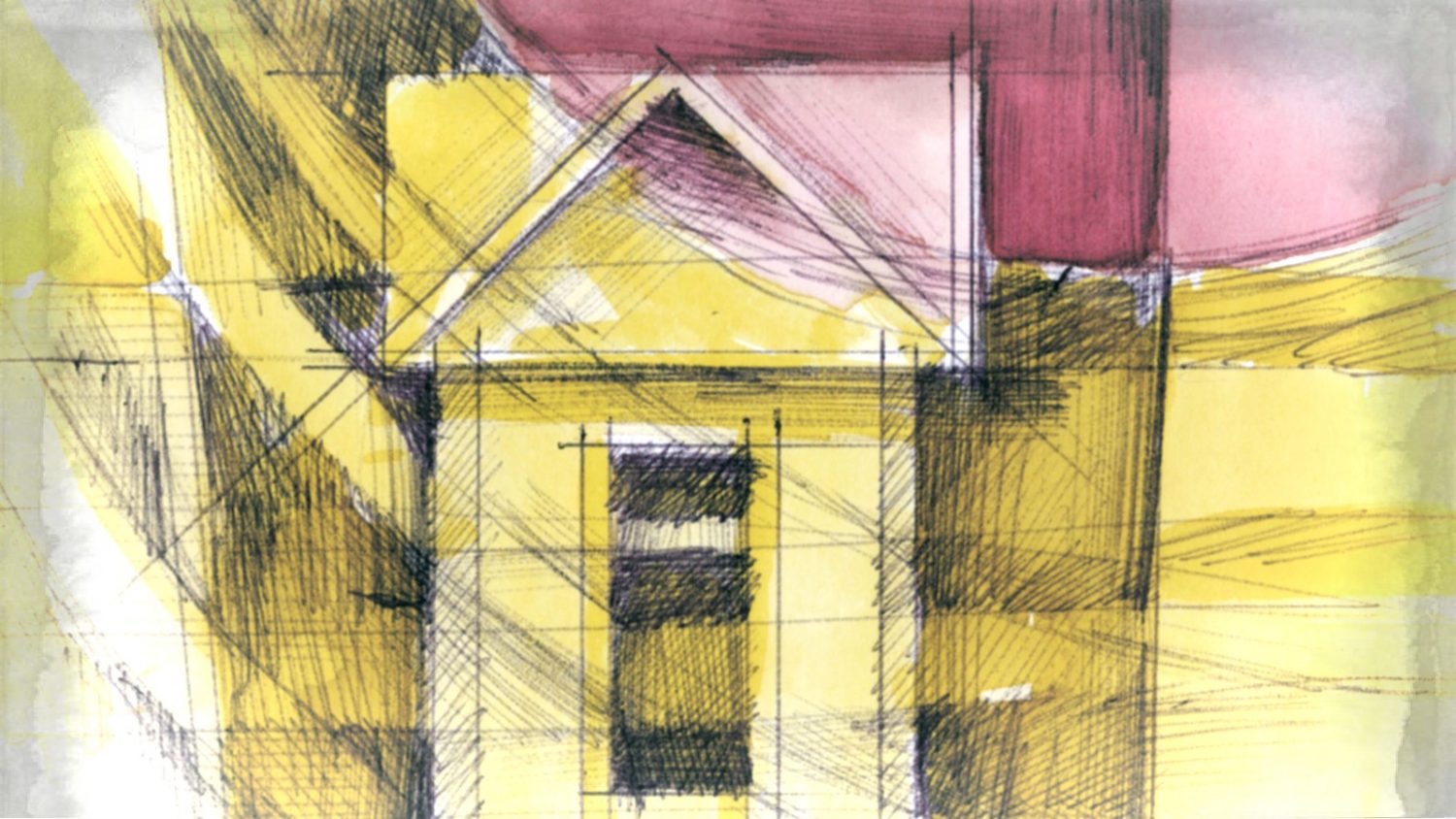
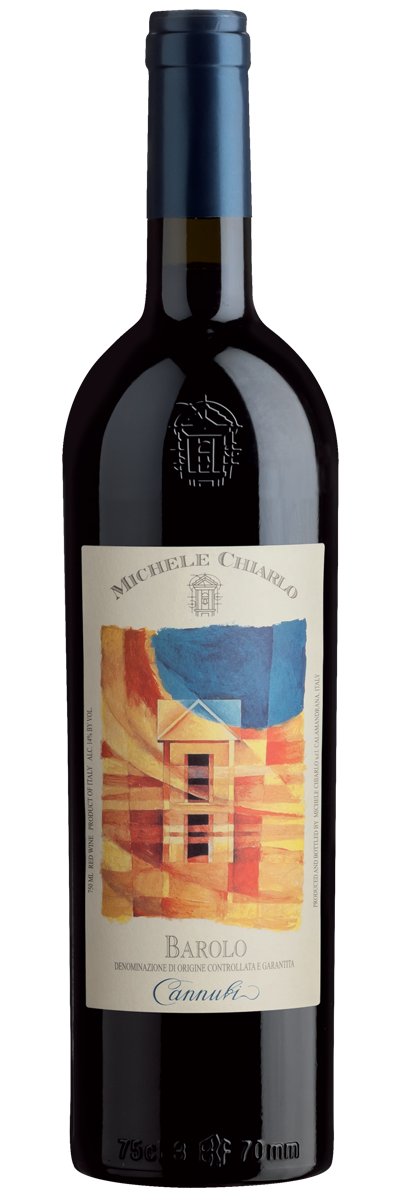
THE CANNUBI BY MICHELE CHIARLO
Since 1989, Michele Chiarlo has owned a parcel of about 1 hectare in the most central part of the Cannubi Geographical Mention, the historical one, where the ancient shed that was used to store the tools of the vineyard (ciabot, in Piedmontese) is still located. It is a steeply sloping vineyard that required Michele Chiarlo a lot of soil care in order to avoid erosion and the associated hydrogeological risks. Under the guidance of the Swiss University of Changin, the rows were “terraced” with grassy edges: a very delicate and meticulous work, which today guarantees the integrity of the soil in a completely natural way. The “terraces”, which are the first to be built within a Langa cru, help to improve the exposure of the grapes and to give fruits of absolute excellence. The soils, as already mentioned, have a mix of Tortonian and Helvetian limestone marls, characterized by 30% sands: poor in organic matter, they are very rich in microelements such as iron and magnesium. The result is a paradigmatic Barolo in terms of structure and elegance. A wine with a high and noble polyphenolic concentration and incomparable gracefulness, capable of being complex and soft at the same time, austere and fascinating, rich in silky tannins that give sensations of body and fullness while maintaining a delicate enveloping. Cannubi, like all the main crus of Michele Chiarlo, is also part of the V.I.V.A. “Sustainable Wine”, adopted to improve and monitor its environmental impact and sustainability along the entire supply chain.