
Beppe Caviola: Reading Cerequio
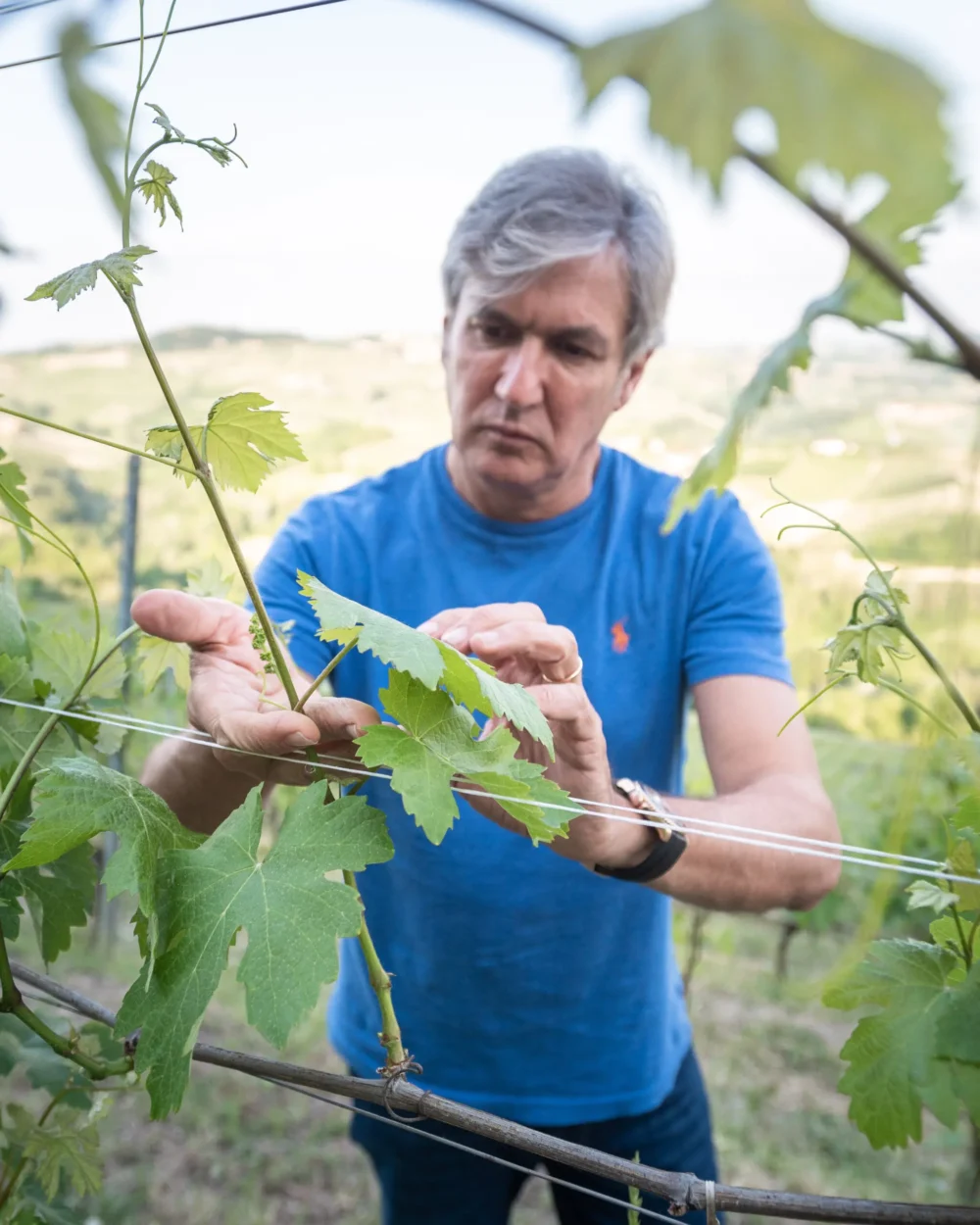
Born in 1962 in Montelupo Albese, Giuseppe “Beppe” Caviola is one of the most influential figures in contemporary Italian winemaking. A graduate of the Enological School of Alba, he built his path between vineyard, cellar, and consultancy, working with numerous wineries in Piedmont and across Italy before founding his own estate, Ca’ Viola. His approach is deeply rooted in hands-on experience, daily exchange with growers, and a philosophy of wine grounded in balance, respect for the land, and listening to what each vintage has to say.
Over the course of his career, he also served as a consultant for Michele Chiarlo. For this celebratory issue, we asked him to share his perspective on Cerequio from a winemaker’s point of view.
Cerequio has long been regarded as one of Barolo’s greatest crus. Renato Ratti had already marked it as a “First Category” site in his 1965 Mappa del Barolo, a reputation time has only served to confirm. It’s no coincidence it’s often called the “vineyard of vineyards”: a vast natural amphitheatre spanning roughly 24 hectares, where the terroir is extraordinarily balanced.
Geologically speaking, Cerequio belongs to the Sant’Agata Fossili marl formation – the most widespread in the Barolo area. The name originates from the village of Sant’Agata Fossili in the Tortona area, and refers to soils formed between the Tortonian and Messinian ages, roughly 8–9 million years ago, during the gradual decline of the ancient Ligurian-Piedmontese Basin. A long and quiet period of decantation in calm waters allowed for the slow deposition of silt and clay – light particles that take time and stable conditions to settle.
To be more precise, Cerequio features laminated Sant’Agata Fossili marls – sedimentary layers that are very thin, perfectly flat, and easily split into sheets just millimetres thick. This stratification speaks to a period of complete stillness in the basin: the absence of currents and low oxygen levels made the seafloor inhospitable to life but allowed for exceptional fossil preservation, still visible today.
This structure gives the soil depth and excellent water retention, thanks to its fine components – clay and silt – which help store water in dry periods and provide a crucial mineral contribution for producing a wine of such structure, complexity, and standing.
The result is a wine with a dense, refined tannic weave that, over time, develops rich and complex aromas dominated by liquorice, white truffle, goudron, and dried rose.
Compared to other crus, Cerequio is also known as the “Riviera of the Langhe”, thanks to a particularly mild microclimate, sheltered from cold winds. The temperature fluctuations between day and night promote optimal phenolic ripening, aromatic complexity, and excellent grape health. The vineyards lie between 290 and 400 metres above sea level, with an average elevation of 320 metres, and face east to northeast toward Brunate and south to southeast on the opposite slope.
When I started working on this cru with Michele Chiarlo, I first had the privilege of getting to know a great man – someone of immense depth, both personally and culturally. Michele was humble, never saw himself as superior, always open to dialogue and exchange, never arrogant. He didn’t like to talk about his own achievements – he was never boastful, never trite, always composed in his manner. A true gentleman. He also had an extraordinary knowledge of Piedmontese viticulture and of the many crus that the Langhe has to offer – and beyond.
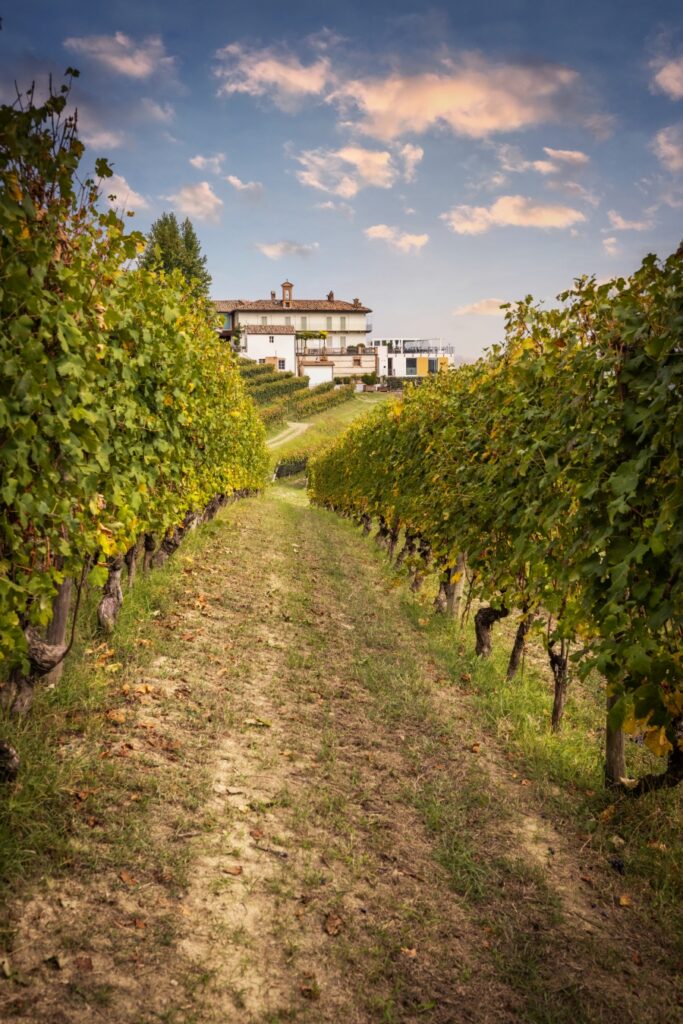 That same respect for place is reflected in the restoration of the historic hamlet at the heart of Cerequio, a project Michele undertook with his family, which today houses the splendid relais Palás Cerequio, nestled among magnificent, storied vineyards.
When I started working on Cerequio, I have to admit – everything felt surprisingly straightforward. Whatever the vintage – excellent, good, or more challenging – Cerequio always brings something extraordinary to the table, in terms of quality, personality, and identity, especially compared to other crus I’ve had the good fortune to work with. For me, the real job is to honour the vintage, enhancing its inherent traits through gentle, consistent practices, and letting the vineyard lead the way – without forcing winemaking or ageing techniques that fall outside our tradition, a tradition Michele knew so well.
Coming back to the wine, I recently had a reminder – not even a week ago, in fact – from a well-known international journalist, following a comparative vertical tasting. He pointed out how, in warmer, drier vintages, Barolo Cerequio doesn’t show the usual signs of overripe fruit or coarse, drying tannins, which are often the result of incomplete phenolic and aromatic ripening. On the contrary, it retains a crisp fruit character, a fresh palate supported by lively acidity, and polished tannins on the finish.
In the vineyard, my approach from the beginning was to foster close dialogue with the estate’s agronomist – a very capable and sensitive professional – and to adapt the vineyard model to the climate shifts we’ve seen since the early 2000s. The focus has been mainly on canopy management during the summer – trimming, leaf thinning, shoot selection, and green harvesting – to adjust the balance between leaf surface and grape load. The goal was to reach an optimal point and synchronise technological ripeness with phenolic maturity.
In practice, we aimed to balance the leaf canopy with the yield, increasing the percentage of leaves directly exposed to sunlight and reducing the number of shaded layers with limited photosynthetic activity. This created an ideal microclimate in the fruiting zone through targeted green work.
The effects of climate change – particularly the rise in hot, dry days – also led us to revisit our approach to leaf thinning, compared to what was done in the 1980s and ’90s. We now take a more conservative approach, knowing that the leaves we must protect are those shielding the clusters from damaging direct sunlight – UV and infrared rays – while it’s the internal leaves that most hinder air circulation and the penetration of indirect light.
It’s worth noting that Nebbiolo, when exposed to direct solar radiation, tends to heat up more than other varieties – sometimes by as much as 10°C. This can push berry tissue temperatures beyond 35–38°C, halting key metabolic processes such as anthocyanin synthesis – which Nebbiolo is already relatively poor in, especially compared to other Piedmontese grapes like Barbera or Dolcetto.
Green harvesting has also changed. In the past, it was done quite aggressively – but that was in a very different climate. Given that the vines in this cru are already naturally balanced thanks to the soil’s ideal structure, thinning now focuses on removing clusters that are bunched together or poorly formed, which would struggle to ripen properly anyway. It’s a measured reduction, avoiding extremes that might lead to excess vegetative growth at the expense of quality.
The extraordinary personality of this great cru is now appreciated by wine lovers and collectors around the world – not least for its surprising ageing potential. Opening a bottle of Barolo Cerequio many years after harvest often reveals a deep evolution, with notes of goudron, liquorice, dried rose and truffle – capable of stirring genuine, unrepeatable emotion.
Ultimately, when it comes to a cru like Cerequio, vineyard work is as much about what not to do as it is about what to do. In the cellar, it all comes down to sensitivity and respect.