
Rovereto, the “Gran Cru” of Gavi
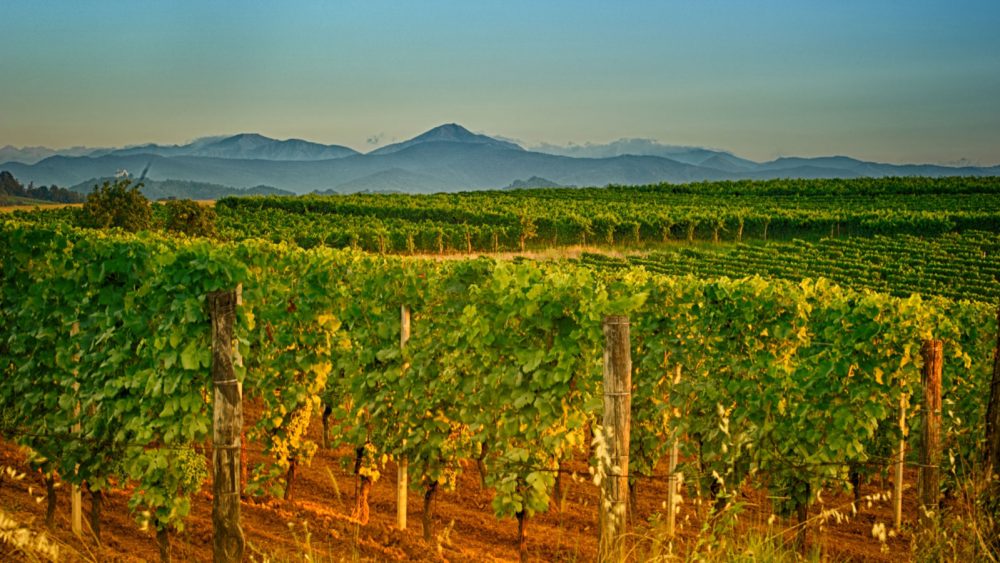
The lands of Gavi are either red or white. Red is the clay, rich in ferrous minerals. White is the tuffaceous, hard and compact marl.
Clay is found in the northernmost territories of the denomination, those closest to the plains of Alessandria, in the municipalities surrounding Novi Ligure. While marl can be found near the town of Gavi, becoming more prevalent southwards, in the towns of Bosio, Carrosio and Parodi Ligure, and rising up to the rocks of the Ligurian Apennines. On the one hand, clay forms soils rich in organic substance which, as we know, influence wine structure, giving it body and power. On the other hand, white marl is stony and poor, it puts the vine under stress and enhances aromas.
The lands of Gavi are either red or white. And then there is Rovereto. Located in the so-called “central zone”: a vast area ideally included within the municipality of Gavi and has mixed soils, influenced by the deposits of the Lemme River that crosses it.
A MILLENARY VOCATION
We must immediately clarify that Rovereto is not an official cru of the Gavi denomination, which would allow to indicate the municipality from which the grapes come on the label: in this case, Gavi del Comune di Gavi. But if we were to classify the areas and make a pyramid according to quality – just like how it has been done in Burgundy or Bordeaux – then there would be no doubts: Rovereto would certainly gain the top spot for its history, vocation and pedoclimatic characteristics.
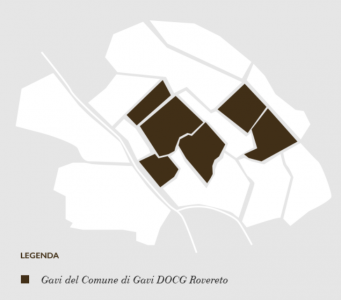
Rovereto map – click to open
The name “Rovereto” is actually quite common. It comes from the word “rovere”, the Italian term for “oak”, which indicates the presence of an ancient forest of oaks whose typically elongated leaves have now become the motif of our wine’s label. But what really sets this area apart is its history. In fact, it would seem that, in the 10th century, a Benedictine settlement was built here. It was called (at least according to later documents) “Grangia Bassignana”, a sort of agricultural farm under the rule of the Abbey of Rivalta Scrivia. Today, more than a thousand years later, that farm still exists. It has changed its name, appearance and size, but not its location – the hamlet of Rovereto – a living testimony of a winemaking vocation that has never stopped since the early Middle Ages.
BETWEEN STONE AND CLAY
Rovereto’s “wine vocation” is one of the oldest in the area, but the soils also contribute to making it special. The soil is made up of “ferrous” clay, presenting a dark red color due to the elevated concentration of iron. The clay is crossed by alternating layers of alluvial gravel, or pebble deposits transported from the Apennines to the plain thanks to the millenary erosive action of the Lemme River. Thus, the wines from Rovereto enjoy the two types of soils that are typical of this area: the stonier ones, which enhance finesse; and the clayey ones, which give the wines body.
Our Rovereto Gavi del Comune di Gavi Docg is a complex and fascinating wine: bright and fragrant, fresh and intense, but capable of revealing good body in the mouth, and unveiling a long finish that is pleasantly savory and round. An exceptional Gavi that perfectly matches both fish and meat, for an unprecedented and ever enjoyable experience.
A LONG-LIVED WHITE
The red soil mixed with stones where Rovereto Gavi del Comune di Gavi by Michele Chiarlo is born has another positive result: it directly influences the wine’s structure, making it unexpectedly long-lived for a white wine. Rovereto proves to be a Gavi capable of “withstanding time”. The best vintages can be tasted years later, and Michele Chiarlo always keeps a stock of Rovereto to offer during vertical tastings, revealing its potential for evolution.
–> Book your personalized tasting with us- discover all our tours and tastings here

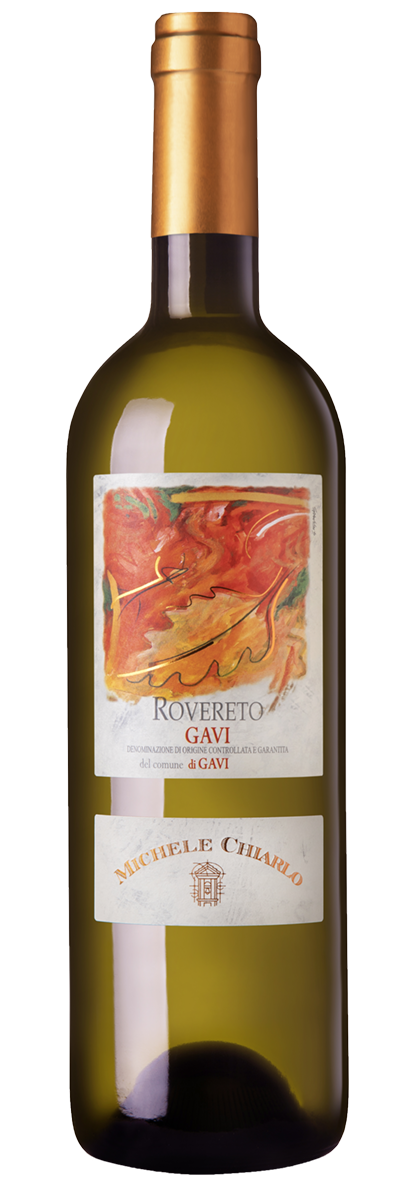
Rovereto Gavi del Comune di Gavi Docg