
Paolo Massobrio: The Power of Relationships
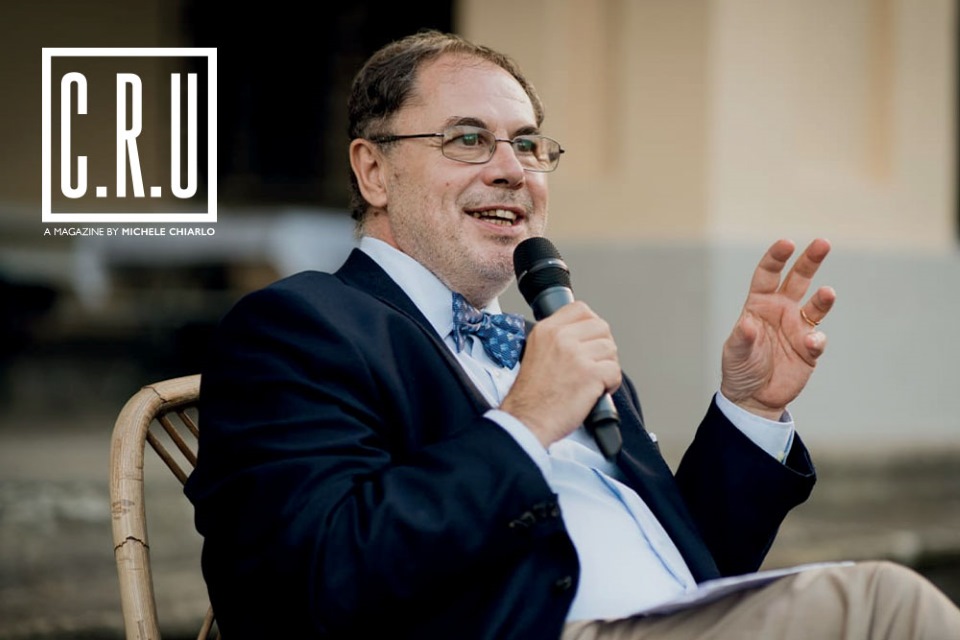
Journalist, food and wine critic, and founder of Club di Papillon, Paolo Massobrio has spent decades chronicling the evolution of Italian wine and gastronomy – witnessing firsthand its cultural, technical, and commercial transformations. The author of numerous books and essays on taste and culinary traditions, he has always placed a special focus on the deep connection between product and place.
Michele Chiarlo – both the man and the winery – was a key figure in this journey. What began as a chance encounter in the 1980s evolved into a lasting friendship and an ongoing dialogue about the challenges and opportunities of Piemontese wine. In this conversation, Massobrio reflects on the defining moments of Chiarlo’s vision, his impact on the territory, and the future of the winery now led by Alberto and Stefano Chiarlo.
You knew Michele Chiarlo for many years and followed his journey closely. What’s the first memory that comes to mind when you think of him?
A memory that was defining for me – something I never let him forget. I was 22 years old, hitchhiking home after a summer holiday in Sardinia with my university friends. At the Tortona tollbooth, a car stopped. The driver offered me a ride. It was Michele Chiarlo.
I had just read a news article about sugar in wine on the ferry, so when I learned he was a winemaker, I started questioning him about it – maybe even a little provocatively. He didn’t back down. In fact, he was so passionate about the discussion that he ended up explaining to me the concept of wine marketing and how to position wines in the American market.
At the time, to me, wine was just my grandmother selling Barbera grapes to the local co-op, like everyone else in my village. But Michele opened up a whole new world – one that I would later explore as a sommelier and journalist. That car ride ended at my front door, and from that moment on, we were connected for life.
In the tribute you wrote after his passing, you shared this story. Are there other moments that define his personality and his approach to wine and the land?
Right after graduating, I did my military service in Castello d’Annone. It was 1986 – the year of the methanol scandal. I had just started writing, and I saw Michele on TV. At the time, he was president of the Consorzio della Barbera d’Asti e del Monferrato, and the debate was tense. The program was designed to reinforce a negative perception of wine, but Michele stood firm. He handled it with dignity and clarity.
He understood that the only antidote to misinformation was dialogue. That was his strength – relationships, discussion, exchange. His friendship with Renato Ratti was a perfect example of that. Their conversations were illuminating.
Michele had a clear entrepreneurial vision – going beyond wine to embrace art, hospitality, and the land itself. How would you describe his ability to anticipate the future?
The art piece of the puzzle always fascinated me. I remember when my friends from Club di Papillon and I visited La Court just after the first artistic installations had been placed. What he did on that hill proved something important – that when you’re deeply rooted in your own history, you can still have an incredible openness to culture and endless curiosity.
You don’t need a university degree for that – all it takes is desire. And Michele had that desire. He wanted his land to be recognized on a global scale. Art, to him, was a way of interpreting the infinite – something that, in a way, you also find in a bottle of wine. His collaborations with Giancarlo Ferraris and later Ugo Nespolo were extraordinary, especially for Alberto and Stefano. It was as if Michele wanted them and their work in the vineyard and the cellar to be nourished by beauty, by art, by storytelling. Alberto and Stefano absorbed this vision completely, developing it even further with extraordinary projects like Palás Cerequio.
You’ve witnessed the rise of Barolo and Barbera on the international stage. How did Michele Chiarlo contribute to bringing visibility to these wines and securing DOCG status for Nizza?
The first time Michele produced a Barolo, he sent me a bottle for my opinion – and the same with every cru after that, always accompanied by a handwritten note. I told him he would go on to write an important chapter in the history of Barolo. But to me, he would always be a great Barberista. And I still believe that (or at least, I want to – though the tastings of Cerequio, Cannubi, and his Barbaresco crus have blown me away).
But what stands out most is how he helped elevate Barbera on the world stage. Nizza Cipressi is a wine that tells the story of Barbera’s complexity in its purest form. It’s one of the wines I keep under lock and key in my personal cellar – because year after year, bottle after bottle, it reveals the secret behind the global success of Barbera.
What defined him as a businessman? Was he more of a strategist or an instinctive decision-maker?
Michelino – that’s what people called him, and I did too – was methodical. He had a clear goal: to establish the wines of his region as benchmarks. And he had a method to get there. But he was also a true strategist. He understood that to conquer international markets, he had to start with Barolo and the Langhe, using them as a gateway for the other wines.
It was a bold move, but it worked. And today, his sons are carrying that vision forward. Cerequio is nothing short of spectacular.
Now, Alberto and Stefano Chiarlo are leading the winery. How do you see their approach to carrying on their father’s legacy?
They truly moved me. Last autumn, I visited them at Palás Cerequio, and what struck me was their humility as they tasted their wines with us journalists – there was no pretension, just a quiet confidence and a willingness to engage in honest discussion. At the same time, I saw in them the enthusiasm of a clear vision – one that knows it can meet the world, reaching the most engaged and discerning wine lovers.
I feel a deep affection for Alberto and Stefano, because seeing them now, so committed to leaving their own mark on a history that runs deep, is something truly special.
The link between wine and culture was a defining theme in Michele Chiarlo’s work. Do you think this approach is essential to telling the story of wine today?
Yes, and essential is exactly the right word.
For a long time, Piemonte’s winemaking culture believed that producing a great wine was enough to succeed. But that’s not how the market works. That was a time of isolation, of disconnection.
Today, wine is about relationships – it’s about art, literature, and hospitality. It’s about creating something memorable, just like the pages of a great book.
Looking ahead, what do you see as the main challenges for wineries like Chiarlo in the future?
Right now, the biggest issues are tariffs, shifting consumption trends, and distribution challenges. But those who have created the right antidotes – like investing in wine tourism – can face the future with more confidence.
Chiarlo has invested heavily in hospitality. The challenge now is to nurture a global community of wine lovers, because history has shown that even the best wine, if not communicated properly, doesn’t exist.
Consumers are evolving. Are we moving toward a wine audience that values experience over just the product?
Yes, but the heart of it all remains relationships.
Today’s younger generations are far more knowledgeable than we were at their age. They have instant access to information. But in the end, they want human connection. They want to hear the voice of the oste in a restaurant, they want a winemaker to tell them about the land behind the bottle they’re drinking.
That is the future.