
Jeff Porter: “It’s all about experience”
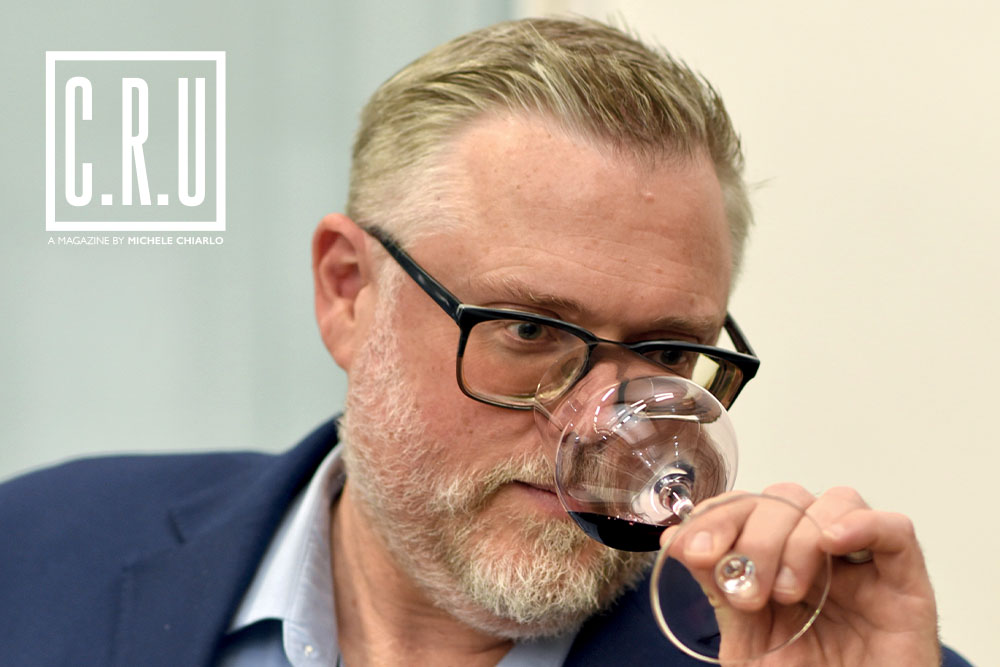
Few people speak about Italian wine with the depth, experience and frankness of Jeff Porter. Over the past two decades, Jeff has worn many hats in the world of wine – from sommelier in Napa Valley, to Beverage Director for the Bastianich Hospitality Group, to the creator and host of SIP TRIP, the travel docuseries that brought American audiences into the heart of Italy’s wine culture – a love letter to Italian wine regions and the people who shape them. Today, he is one of the most recognizable voices in the American wine world as a Writer-at-Large for Wine Enthusiast, where he reviews wines from across Northern and Central Italy. But wherever he is, Jeff speaks about wine the same way: as a cultural force, an emotional bridge, and a way to find beauty in the world. When he visited Palás Cerequio, that philosophy found fertile ground.
You’ve explored many of the world’s greatest wine regions. What was your first impression when visiting Palás?
Palás is awe-inspiring. That’s really the only word that fits. You come down the hill, passing through the vineyards of Cerequio, and then you arrive – a 17th-century palace next to this stunning, modern structure. There’s a sense of thoughtful elegance in one of the world’s most beautiful wine landscapes. I brought three women here recently who work for a high-end luxury brand, and they were blown away. That tells you something!
You’ve worked in wine from every angle. How do you see the role of high-end hospitality in the industry today?
It’s absolutely critical. But I’d even push back on the term “high-end”: what we need is just hospitality – done thoughtfully. The idea that something has to be pompous to be good is misleading. It just needs to be well-executed and guest-focused. A winery that offers a place to sit, to relax, to eat – that’s already creating something powerful. You’re not rushed, you’re cared for. That makes a big difference. And Palás is doing this very well: it’s a place where you just feel comfortable, able to enjoy wine the way it should be enjoyed.
Palás Cerequio is designed as a “Temple of Barolo,” offering an immersive experience where wine and territory is central to everything. How important is it to create such dedicated places for wine lovers?
I think it’s imperative. And I give Michele Chiarlo a lot of credit for not just focusing on their wines, but embracing the entire region, because to know one without the other is to know nothing. When a winery steps beyond self-promotion to embrace the broader cultural and viticultural context, they become stewards of the land. It’s a generous, collaborative approach, and that’s what elevates the experience – not just for wine lovers, but for the region as a whole.
How do you see the evolution of wine tourism? What are people looking for when they visit a place like this?
It’s all about experience now. More people travel today specifically to feel something – not just to check off a destination. That hasn’t changed completely – it’s always mattered – but more people are seeking it, and more people are able to seek it. The shift isn’t just in how we travel, it’s in how we value things. People are steering away from material focus and leaning into experiences, because those can’t be taken away from you: you can lose a possession, but once you’ve lived something meaningful, it becomes a part of who you are. And more and more, that’s what travelers are after.
What do international visitors seek most when they travel to Italy for wine? Do you notice differences between American and European travelers?
Definitely. Americans tend to be curious and wide-eyed: we’re enthusiastic, eager to learn, very excited – probably because we’re not jaded by having the beauty of the old world around us all the time. Europeans, on the other hand, often come with a bit more cultural context or even assumptions. Sometimes that means a deeper base of knowledge, other times a more critical eye. But in the end, everyone wants the same thing: a beautiful place, a meaningful experience, and a sense of connection.
The connection between wine, art and culture is deeply embedded in Michele Chiarlo’s philosophy, with projects like the Art Park La Court and Cannubi Path. How do you see this kind of integration?
Again, one without the other is nothing. Quality wine is totally linked to culture – it’s not a commodity. When you bring those elements together, as Michele Chiarlo has done, you help guests open a wider lens on the place, and on the people behind it. And that’s what people are looking for now. In a world where we spend so much time online, where we often feel isolated, these kinds of experiences help people feel closer and more connected.
What’s important, though, is being authentic about it – as long as the art fits the space and the idea, that’s fine. If it’s forced, then it feels forced. Like, any time you push a round peg into a square hole, the guest will feel it, right? It just has to feel natural.
Does it feel natural at Palás?
Yeah, I think it does. It feels intentional – it doesn’t feel like someone just added art or architecture as a gimmick. The Sky Bar, for example, is a stunning space, but it’s not intimidating. It invites you in. For guests who may be new to wine or Italian culture, that kind of atmosphere is welcoming.
There’s no pretense – just a genuine desire to share beauty. And honestly, if you have the ability to be around beautiful things, why not do it?
That was Michele’s vision. Have you had a chance to meet him?
I only met him once, but he had that presence. That aura. He was one of those people who walk into a room and shift the energy around them. I genuinely believe some individuals radiate purpose so clearly that the molecules move differently when they’re near. Michele was one of those people.
Michele Chiarlo was recently named among the top 50 wineries for wine tourism by Food&Wine, and La Corte restaurant received Wine Spectator’s Best Award of Excellence. What does this recognition say to you?
It says they understand what matters. They’re not just trying to push their own wines – they’re creating a space that honors the guest, the territory, and the full experience of being here. They recognize it’s not about them. It’s about the collective. And, you know, however you want to phrase it, the old adage still holds: what’s good for the goose is good for the gander.